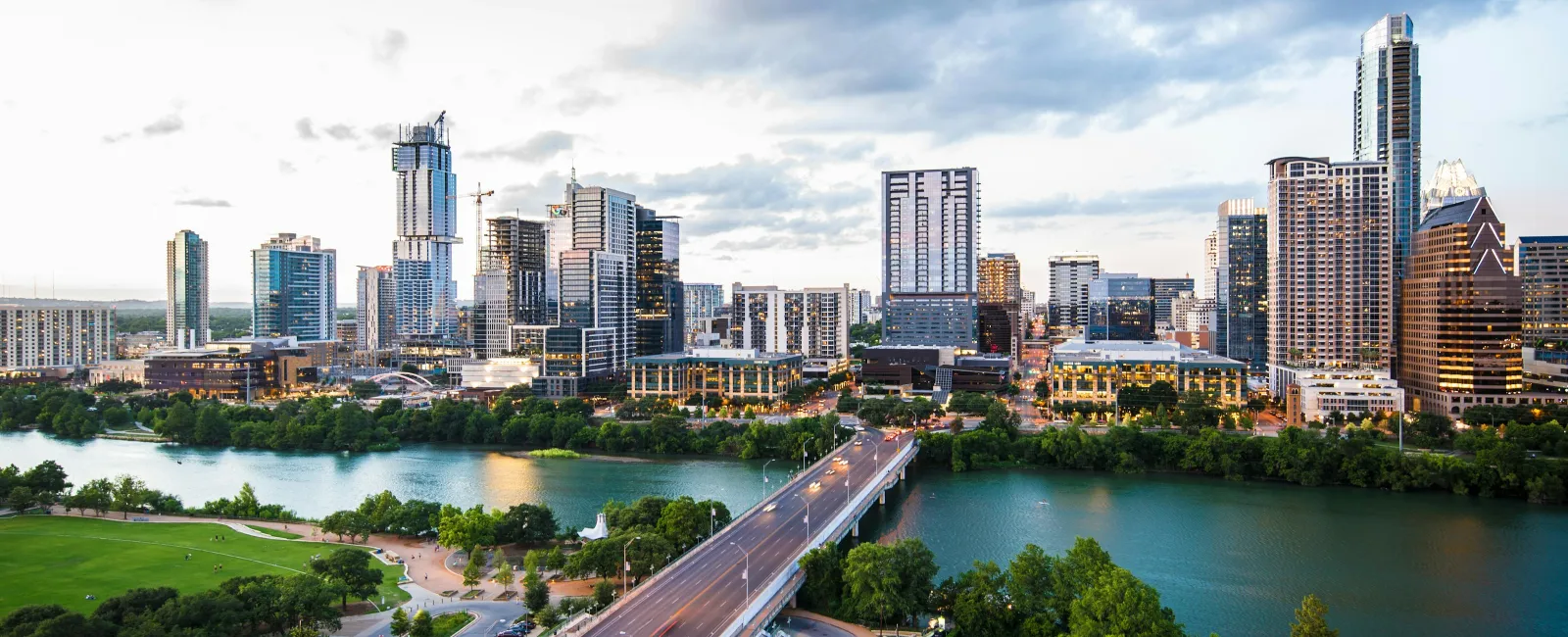
For years, the US housing conversation has centered on rising rents and worsening affordability. But Austin, Texas is beginning to challenge that narrative.
After experiencing massive rent increases during the 2010s and pandemic years, Austin recently recorded one of the sharpest rent declines among major US cities, with rents falling roughly 6% year-over-year and returning close to pre-pandemic levels.
Many analysts point to one major reason: Austin built a lot of housing.
Between 2015 and 2024, the city added around 120,000 new homes — a nearly 30% increase in housing supply. At the same time, Austin introduced a series of pro-housing reforms, including easing apartment zoning rules, reducing parking requirements, allowing more accessory dwelling units (ADUs), and permitting multiple homes on traditionally single-family lots.
The result was a major construction boom that increased competition in the rental market and helped soften prices.
Austin's experience has become a leading example for the YIMBY movement, which argues that cities must make it easier to build more housing if affordability is going to improve.
Still, the debate is not entirely settled.
Some economists argue that Austin's rent decline may also reflect broader national trends. Across the US, rents have cooled since the pandemic-era spike, especially in Sunbelt cities experiencing rapid multifamily construction. Others believe Austin's aggressive reforms played a critical role by removing the regulatory barriers that typically slow development.
What remains widely accepted, however, is that housing supply matters. Cities that consistently underbuild — such as San Francisco — continue to face severe affordability problems due to years of housing shortages relative to population and job growth.
Austin's story also carries important implications for the growing single-family rental (SFR) and build-to-rent (BTR) sectors. As affordability challenges push more households toward long-term renting, cities that allow flexible and large-scale housing development are becoming increasingly attractive for institutional rental housing operators.
The city's combination of population growth, zoning reform, and large-scale development has helped position Austin as one of the most closely watched housing markets for both multifamily and BTR expansion.
Austin may not have fully solved the housing crisis, but it has demonstrated something important: policy decisions can shape housing affordability, and expanding supply at scale can help ease pressure on renters.
As housing costs continue to dominate urban policy discussions worldwide, Austin's experiment is likely to remain one of the most closely watched examples in modern city planning.
Source: Vox