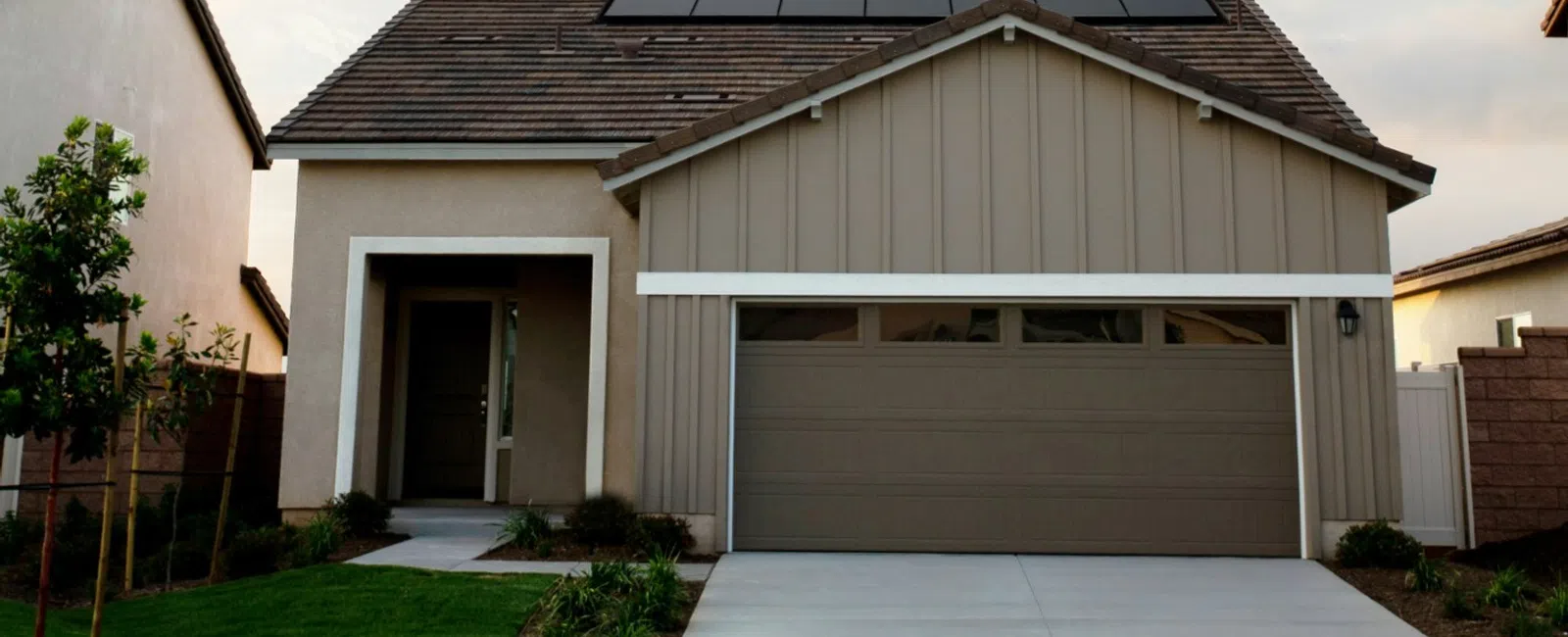
The Build-to-Rent (BTR) sector has evolved rapidly over the past decade, with rental townhomes emerging as one of the fastest-growing segments of the U.S. housing market. As developers continue to refine product design and investment strategies, one question frequently arises: Does the added cost of an attached garage generate a meaningful financial return?
A new white paper from Hunter Housing Economics and Yardi Matrix provides a data-driven answer. Co-authored by Brad Hunter, Founder of Hunter Housing Economics, and Doug Ressler of Yardi Matrix, the study analyzes 1,574 rental townhome communities representing more than 238,000 units nationwide to evaluate the impact of attached garages on rents, net operating income (NOI), and asset value.
Garages Deliver Measurable Rent Premiums
Using an econometric analysis that controlled for factors such as unit size, property age, occupancy, market quality, and rental category, the study found that attached garages generate significant rent premiums across rental townhome communities.
According to the research:
- One-car garages generate annual rent premiums of approximately $1,680 to $2,580 per unit.
- Two-car garages generate annual rent premiums of approximately $2,940 to $4,440 per unit.
The findings suggest that renters are willing to pay more for the convenience, storage, security, and lifestyle benefits associated with attached garages, particularly in suburban markets where garages are considered a standard feature of for-sale housing.
The Impact Extends Beyond Rent
The report concludes that garages contribute to financial performance in ways that extend beyond rental income.
Garage-equipped communities were found to benefit from:
- Higher net operating income
- Lower resident turnover
- Greater occupancy stability
- Reduced leasing and make-ready costs
The study notes that residents with attached garages tend to remain in their homes longer than residents in conventional apartment communities. As a result, developers and operators may realize additional NOI benefits through reduced turnover expenses and improved occupancy performance.
Significant Value Creation for Developers
One of the report's most compelling findings relates to property value creation.
Based on estimated rent premiums and standard capitalization rate assumptions, the study concludes that:
- A one-car garage can create approximately $21,500 in additional value per unit.
- A two-car garage can create approximately $37,850 in additional value per unit.
For many Build-to-Rent projects, these value gains meet or exceed the incremental cost of garage construction, making garages one of the more financially impactful design decisions available during project planning.
According to the study, a two-car garage often generates sufficient incremental revenue to justify construction costs in many suburban markets, particularly when considering both operating income and exit valuation.
Market Conditions Matter
While the national findings are compelling, the report emphasizes that garage premiums vary significantly by market.
The strongest premiums were observed in suburban Sun Belt and Midwest markets, including areas such as Nashville, Dallas, Atlanta, Phoenix, Kansas City, and Salt Lake City. In these locations, garages are often viewed as an expected feature rather than a luxury amenity, creating stronger pricing power for rental communities that provide them.
By contrast, dense urban markets generally exhibited smaller premiums, reflecting different transportation patterns, land constraints, and renter preferences.
Implications for BTR Developers and Investors
The study offers a practical framework for evaluating garage investments.
According to Hunter Housing Economics and Yardi Matrix, developers should compare the incremental construction cost of garage provision against the capitalized value created by the resulting rent premium. In many suburban markets, particularly those characterized by strong demand for single-family-style living, attached garages can create positive equity value before accounting for long-term operational benefits.
For lenders and investors, the findings also have underwriting implications. The report suggests that garage-equipped communities often demonstrate stronger stabilized NOI performance and may warrant different comparables than communities without garages.
Key Takeaway
The research from Hunter Housing Economics and Yardi Matrix reinforces a broader trend shaping the rental housing market: residents increasingly seek housing options that offer the space, convenience, and functionality traditionally associated with homeownership.
Within rental townhome communities, attached garages appear to play a meaningful role in delivering that experience. The study concludes that garages can generate measurable rent premiums, improve operating performance, and enhance asset value—making them a potentially compelling investment for developers, lenders, and investors evaluating Build-to-Rent opportunities.