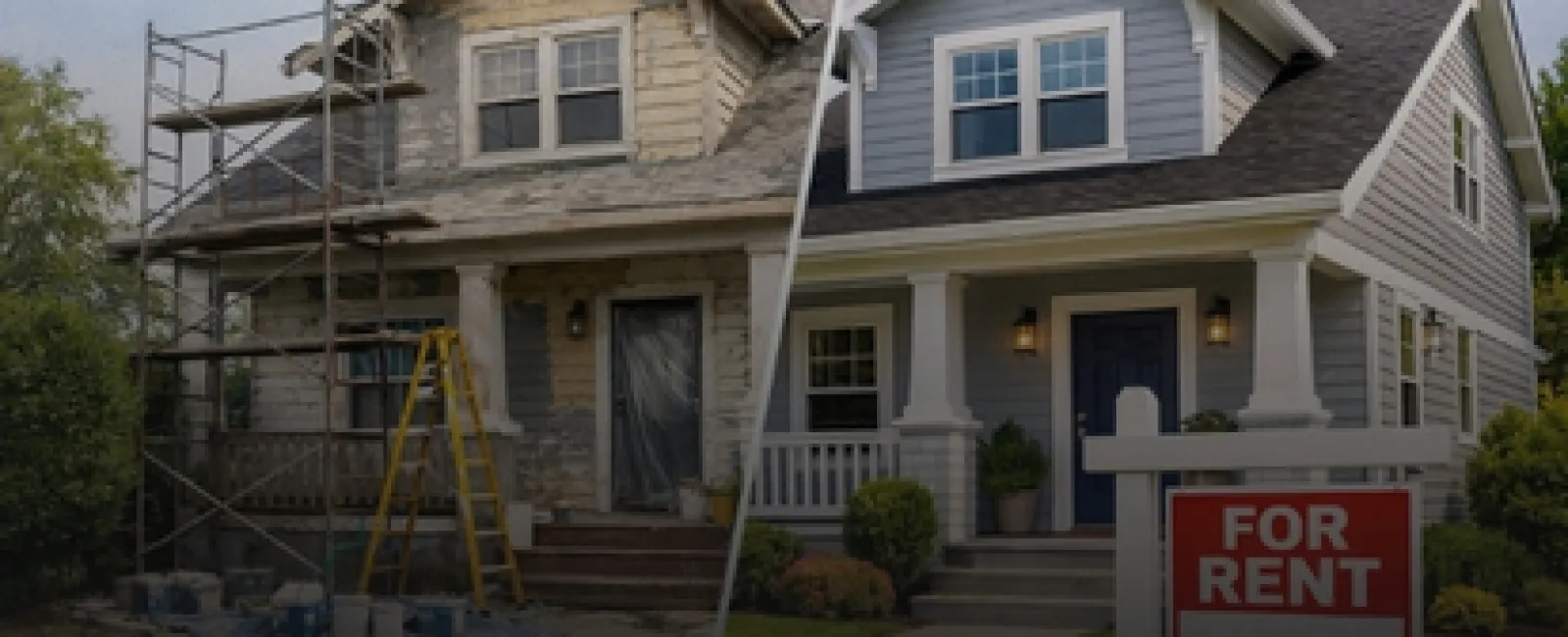
The debate over the role of large institutional investors in the single-family rental (SFR) market often centers on a single question: Are these firms constraining homeownership, or are they essential to the health of the housing market? While policy proposals like the 21st Century ROAD to Housing Act seek to limit institutional acquisitions, new evidence suggests that these investors are performing a critical, often overlooked function: rehabilitating the nation's distressed housing stock.
A recent report analyzing data from Amherst Holdings and the AEI Housing Center provides a deep dive into the "fix and hold" strategy that is reshaping the effective housing supply across the United States.
The "Fix and Hold" Strategy at Scale
Contrary to the "fix and flip" narrative, the data shows that institutional investors are long-term partners in the communities where they operate. Amherst, for instance, retains 99% of the properties it rehabilitates for long-term rental use. This strategy isn't about quick profits; it's about returning underutilized homes to productive use and extending their economic life.
Key Insights from the Report:
- Targeting the "Un-buyable": Institutional investors aren't competing for move-in-ready homes. Instead, they systematically target properties in below-average condition. Approximately 73% of Amherst's acquisitions were in worse condition than the median home in their ZIP code.
- Substantial Capital Injection: The scale of investment is significant. With a median rehabilitation spend of $32,000 per home, these firms are tackling deferred maintenance—roofing, HVAC, plumbing, and structural repairs—that many first-time buyers simply cannot afford or manage.
- Expanding Effective Supply: By rehabilitating homes that were previously vacant or at risk of becoming uninhabitable, investors are effectively expanding the housing supply without the need for government subsidies.
- Economies of Scale: Large-scale operators leverage centralized procurement and standardized materials to reduce renovation costs by roughly 20% compared to smaller operators, allowing them to revitalize distressed assets more efficiently.
Market Impact and Policy Implications
The report highlights a crucial correlation: poor property condition is a primary driver of vacancy. When homes fall into disrepair, they are effectively removed from the market. Institutional investors act as a "safety net" for this segment of the housing stock, preventing further deterioration and neighborhood blight.
Despite their significant investment, these firms represent a relatively small slice of the overall market—accounting for only about 3% of owner-occupied purchase activity in their target tracts. They operate at lower price points (typically 15% below the tract median), filling a gap that traditional financing and individual buyers often cannot reach.
Key Takeaway:
The housing affordability crisis is fundamentally a supply problem. While restrictive legislation may be politically popular, the evidence suggests that limiting institutional investors could inadvertently shrink the housing supply by removing the primary private actors capable of large-scale rehabilitation. To solve the crisis, the focus must remain on increasing supply and maintaining the quality of the existing housing stock.
Source: AEI